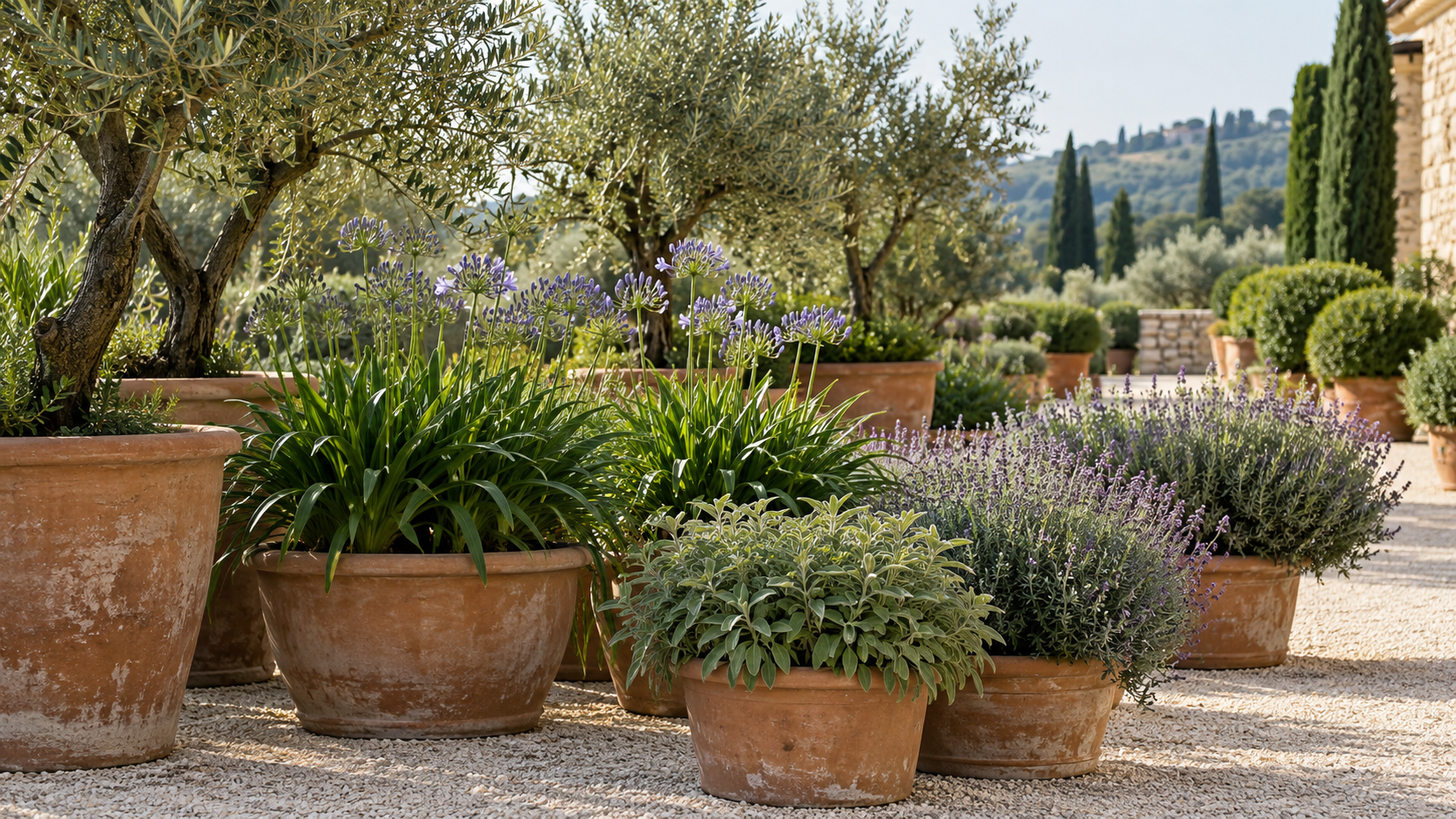
Composing with form and season
We consider habit, leaf texture, colour and the role each plant might play in the whole. An evergreen structure can support the garden through quieter months; grasses introduce movement; flowers mark transitions without needing to occupy the entire scene. Design puts these qualities into conversation, looking for continuity that remains understandable when one element changes or reaches the end of its particular season of interest.
Exposure, soil characteristics, available space and local conditions guide the selection. Visual preferences are discussed alongside these factors, allowing vegetation to belong to the place and to the daily life of the people caring for it. Existing plants may provide useful structure or an important connection with the garden’s earlier character.
Drawing for what will grow
A newly planted bed shows only the beginning of a composition. We consider future development, relationships between plants and the access needed for care. Initial spacing is discussed in relation to growth, rather than relying solely on an immediate impression of fullness. Existing specimens can become valuable points of reference where their condition and the direction of the project allow them to be retained.
Combinations are communicated through layouts, images and guidance that explain the roles of different planting groups. Nursery availability and the characteristics of actual specimens will need to be checked at the appropriate stage. Any substitution should preserve a plant’s function in the composition, rather than matching only a flower colour. Care guidance completes the design, helping the initial picture develop with a coherent direction as the garden gains depth and maturity.